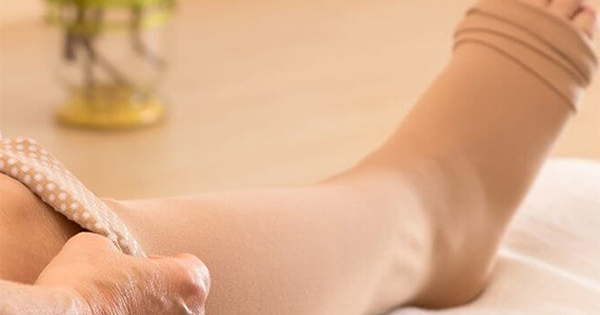
Under normal physiological conditions, the valves in the venous system play a vital role in ensuring proper blood circulation. They guide blood from the superficial veins, which lie closer to the skin’s surface, into the deeper venous system facilitating efficient return of blood to the heart despite the force of gravity. However, various medical conditions such as obesity, extended periods of inactivity and certain genetic factors can disrupt the normal functioning of these valves (Nicolaides et al, 2014).
Venous insufficiency presents with a range of troubling symptoms including oedema, noticeable skin changes, persistent fatigue, leg pain and a heavy feeling in the legs (Patel and Surowiec, 2024). Early diagnosis is crucial and can be effectively achieved through ultrasound, which can reveal venous reflux and blood pooling in the deep veins of the legs (Patel and Surowiec, 2024). When these anatomical functions are chronically impaired, chronic venous insufficiency may develop, characterised by inadequate circulation and potential complications including swelling, discomfort, skin changes, tissue breakdown and the development of venous leg ulcers (Patel and Surowiec, 2024).
The daily utilisation of compression garments is strongly recommended for individuals with chronic venous insufficiency and associated lower extremity oedema, as this intervention can effectively alleviate symptoms and reduce the risk of ulcer development (Health Quality Ontario, 2019). However, the application of traditional compression garments often poses challenges. Issues such as difficulty in application and removal, discomfort during extended wear, and limitations in available sizes can impede patient adherence and, ultimately, impact treatment efficacy (Medina Rodríguez et al, 2025). Addressing these obstacles is essential for optimising patient outcomes and enhancing quality of life.
The pilot study compares patient feedback on their current medical-grade compression garments (30–40 mmHg) with an innovative compression garment (AWCS, Sun Scientific, Dobbs Ferry, New York, USA) indicated for patients with venous insufficiency, lower extremity oedema or a history of venous leg ulcers.
The AWCS is a below-the-knee wrap providing adjustable gradient compression up to 50 mmHg, suitable for treating venous ulcers, chronic venous insufficiency and lymphoedema. It offers three compression ranges (20–30 mmHg, 30–40 mmHg and 40–50 mmHg) and consists of an inflatable sleeve made from durable nylon and polyurethane, a removable under sock, and an inflation system with a hand pump and dial for compression adjustment [Figure 1]. The under sock helps maintain sleeve position and absorb sweat. It is available in two versions: one with an integrated foot portion, and one for ankle to below-knee compression. The AWCS is safe for both daytime and nighttime wear. Adjustable straps allow easy self-application and promote effective circulation.
The aim of this pilot study was to evaluate patient feedback comparing the usability of their current compression garments with the AWCS, focusing on comfort, ease of use, effectiveness in providing compression, and overall user experience.
Materials and methods
A diverse group of participants (N=15) was included in this usability evaluation, representing a range of demographics, activity levels and backgrounds. This diversity ensured that the feedback captured a wide array of experiences and needs. The study was conducted at a single US clinic, with institutional review board approval secured for this pilot investigation. All participants were over the age of 18 and had provided written informed consent prior to enrollment. Each participant was currently using a daily-wear, medical-grade compression garment (30–40 mmHg) for the treatment of chronic venous insufficiency. No participants had open low-extremity wounds at the time of evaluation.
This was a single visit study. Participants received individual instructions on the proper use of the AWCS. The investigator observed user interactions with the device, including each component that was engaged during use, such as the velcro-closure AWCS inelastic compression garment featuring an adjustable compression dial and valve stem cover with deflation key [Figure 1].
A structured questionnaire was used to collect feedback on participants’ experiences with their current compression garments, as well as their impressions after donning, wearing and doffing the AWCS. Responses were recorded using a 5-point Likert scale where 1 indicated “strongly disagree” and 5 indicated “strongly agree”.
In the first part of the study, demographic data and prior experiences with compression garments were collected to establish expectations and perceived benefits. In the second part, participants tested both their existing garment and the AWCS, with clear instructions on correct application and removal. Observations were made regarding donning and doffing ease, comfort during wear and any challenges faced. Following each trial, participants completed a survey assessing the AWCS across various dimensions, such as comfort, fit, breathability, compression level and overall usability, with direct comparisons made to their existing garment.
Statistical analysis
Quantitative data from the surveys were used to compute the average ratings of comfort, usability and effectiveness for each garment type. Qualitative data from focus groups were analysed to identify common themes and insights regarding user experiences.
Results
This pilot study included 15 patients (10 females, 5 males), aged between 37 and 88 years. The results align closely with the aim of evaluating patient feedback on the usability of current compression garments versus the new AWCS model [Table 1].
Findings reveal significant insights into patient experiences, highlighting areas where traditional garments fall short and where the AWCS excels. A substantial majority of participants (80%) indicated a commitment to wearing compression garments regularly (5–7 days per week). However, usability concerns were prominent, with over half (53.3%) reporting difficulties in using their current garments. Frequent users echoed this sentiment, with 58.3% finding their garments challenging to manage. The need for assistance from caregivers was notable, with about 46.7% acknowledging they required help, indicating a critical area for improvement [Figure 2].
Furthermore, satisfaction scores reflected a concerning trend: 60% of participants felt that their current garments did not meet their needs. This dissatisfaction was more prevalent among frequent users, signifying a crucial gap in the effectiveness of existing options. Comfort was another area of concern, as two-thirds of participants found their garments cumbersome to remove, reinforcing the necessity for design improvements [Figure 2].
The feedback on the comfort of current compression garments revealed that 10 out of 15 participants (66.67%) agreed or strongly agreed that their garment was cumbersome to remove. This sentiment was even stronger among frequent users, with 9 out of 12 participants (75%) indicating difficulty in removal. Regarding comfort related to slippage or binding, 6 participants (40%) disagreed or strongly disagreed that their garment achieved a satisfactory fit. Additionally, 5 participants (33.3%) felt that most users of their current garment could not use it with ease, underscoring the necessity for improvements in design and usability.
In stark contrast, the AWCS demonstrated strong usability ratings: 93.3% of participants found the AWCS easy to use and 80% reported that it met their needs with no participants expressing dissatisfaction regarding its effectiveness [Figure 3].
Comfort ratings favoured the AWCS with 86.67% of participants agreeing that it was not cumbersome to remove, highlighting a significant advancement in user experience. The AWCS effectiveness survey yielded impressive findings, with 12 out of 15 participants (80%) reporting that the AWCS met their needs. Notably, none of the participants disagreed with this statement, indicating that 100% felt neutral, agreed, or strongly agreed. Among frequent users of existing compression garments, satisfaction was even more pronounced: all participants (100%) confirmed that the AWCS garment fit their needs [Figure 3].
Positive feedback regarding the AWCS comfort was noted, with 13 out of 15 participants (86.67%) disagreeing that the AWCS is cumbersome to remove. Among frequent garment users, 10 of 12 participants (83.3%) shared this view. Additionally, 12 of 15 participants (80%) reported that the AWCS offered exceptional comfort without slippage or binding, and 13 of 15 participants (86.67%) agreed or strongly agreed that the AWCS is user-friendly. The willingness to adopt the AWCS was overwhelming, with 87% of participants preferring it over their current garments for its ease of application, comfort and usability [Figure 3].
At the conclusion of the study, 13 of 15 participants indicated a willingness to switch to the AWCS compression garment, with 12 participants (92.3%) expressing preference over their current options. Usability scores showed that 14 out of 15 participants (93.3%) found the AWCS easy to apply and remove, and 14 (93.3%) stated they would opt to wear the AWCS more often [Figure 4]. Overall, these results emphasise the AWCS as a superior alternative to current compression garments, addressing critical user concerns and enhancing the overall patient experience in compression therapy. The AWCS garment was found to be easier to apply compared to standard options, reducing patient exertion and improving quality of life during oedema management.
Discussion
Compression therapy plays a pivotal role in the treatment of chronic venous insufficiency, lymphoedema and venous leg ulcers; and is essential for preventing ulcer occurrence through its ability to effectively reduce venous hypertension, alleviate venous stasis and inflammation and promote vital tissue vascularisation (O’Donnell et al, 2014). Medical compression stockings are proven to reduce oedema and swelling, while significantly enhancing microcirculation (Dahm et al, 2019).
There are two types of compression stockings: elastic and inelastic. One of the primary benefits of inelastic compression is its ability to maintain consistent and stable pressure (Bar et al, 2021). Traditional elastic wraps can be difficult to apply correctly, often leading to pressure variations that may be too tight, potentially restricting circulation; or too loose, diminishing treatment effectiveness. Inelastic compression provides a more reliable solution, ensuring optimal support throughout the treatment process (Barfield et al, 2023).
Typically extending to the knee or hip, these stockings exert pressures ranging from 0 mmHg to 40 mmHg. There is currently no universal standard for grading compression pressure in medical-grade stockings (White-Chu and Conner-Kerr, 2014). Manufacturers categorise them based on the pressure they are intended to apply to the leg. However, this specified pressure may not accurately represent the true level of compression experienced by the wearer. Various factors can impact compression effectiveness, such as the stocking’s elasticity, which can diminish over time with use and washing, the method of donning and doffing and individual characteristics, such as leg shape and circumference (Prandoni et al, 2004).
The current garment satisfaction scores in this pilot study illustrate that many patients feel their compression garments do not effectively fulfil their intended purpose. Participants consistently rated their current garments lower than the AWCS in terms of effectiveness, comfort and issues such as slippage and binding. This suggests that the AWCS may be more favourable in providing these primary benefits.
Adherence to traditional compression garments often presents significant challenges, primarily due to difficulties in donning and doffing these devices. As individuals age, they may experience a range of physical limitations, including reduced range of motion, decreased dexterity, poor eyesight and diminished strength and agility (Reich-Schupke et al, 2009; Bar et al, 2021). These factors can create barriers to the effective use of compression garments. The ease-of-use feedback collected in this study underscores AWCS’s user-friendly design and its capacity to promote independence and adherence.
Another challenge of traditional compression therapy is its “one size fits all” approach, which often proves ineffective for many patients (Barfield et al, 2023). As seen in this study, 14 of 15 participants (93.3%) agreed or strongly agreed that they would be open to switching to a new garment. Many participants reported issues with usability, effectiveness and comfort in their current garments. The study product’s inelastic compression system addresses this issue by providing customisable pressure levels, allowing healthcare providers to tailor compression to each patient’s specific needs to improve therapeutic outcomes.
Empowering patients through shared decision making, providing well-fitting compression stockings, and committing to regular checkups are key strategies that minimise the recurrence risk of venous ulcers and other complications of chronic venous insufficiency. Based on the analysis performed, the AWCS emerged as a highly user-friendly alternative to traditional compression garments across a diverse demographic. Comfort ratings for wear, application and individual adaptability surpassed those of the participants’ current garments. By enhancing user experience and addressing common obstacles, the AWCS has the potential to significantly improve adherence rates and, consequently, patient outcomes in this vulnerable population.
Limitations
The limited number of participants in this pilot usability study may lead to unrepresentative findings. This small group may not capture the full range of user needs and behaviours, potentially affecting results. Findings from this sample lack statistical power, making it challenging to draw reliable conclusions that can generalised to a broader population. Differences in participants’ familiarity with the product could have influenced their interactions and perceptions, complicating data interpretation. Additionally, participants may have modified their behaviour when observed, leading to results that may not reflect typical usage patterns. It should be noted that the findings of this pilot usability study cannot be used to make generalisations regarding long-term clinical outcomes.
Conclusion
This study aimed to identify which types of compression garments are most effective for their intended purposes and how various design elements impact user satisfaction and usability. By synthesising both quantitative and qualitative data the study provided valuable insights to guide manufacturers in improving their products and help consumers make informed choices based on personal needs and preferences. Ultimately, the findings could support greater compression garment utilisation and contribute to improved health outcomes. Larger studies are needed to confirm these results.