A pressure injury is localised damage to the skin and/or underlying tissue, usually occurring over a bony prominence or in association with a medical or other device. It results from sustained pressure, or pressure in combination with shear (National Pressure Injury Advisory Panel [NPIAP], European Pressure Ulcer Advisory Panel [EPUAP] and Pan Pacific Pressure Injury Alliance [PPPIA], 2026). Pressure injuries, also called pressure ulcers or bedsores, are a leading hospital adverse event, yet are mostly preventable. Anyone with reduced mobility, impaired sensation, poor perfusion or nutritional compromise is at risk, and the burden is expected to grow as populations age.
Across the Asia-Pacific region, pressure injuries affect patients in a range of care settings, from acute hospitals and rehabilitation services to long-term care and community settings, and reported prevalence varies widely by population and setting. A multi-centre survey covering 52 hospitals in China and 14,675 older patients showed that the prevalence of pressure injuries was 3.3% (Jiang et al, 2022). Rehabilitation settings have reported 5.9% in Sri Lanka and up to 29.9% in South India (Zakrasek et al, 2015). In Australia and New Zealand, a systematic review found an overall prevalence of 12.9% in acute-care hospitals, with a hospital-acquired prevalence of 7.9% (Rodgers et al, 2019). Southeast Asian data are more limited and outdated. A community study of 790 people with chronic spinal cord injury in Malaysia, Indonesia and Thailand found that 35% had pressure injury problems (Kammuang-Lue et al, 2024). Although these figures are unable to be directly compared because of differences in populations and care settings, they illustrate the continuing burden of pressure injuries across the Asia-Pacific region, and the need for more consistent regional data.
The challenge does not end when a pressure injury heals. Recurrence is common, with reported rates ranging from 21% to 60% after surgical reconstruction (Lin-Yin et al, 2023). This reinforces the importance of identifying and addressing the factors that contribute to pressure injury development, rather than focusing solely on wound closure. Prevention therefore needs to remain an integral part of care throughout the patient journey.
For those affected, the consequences can be significant. Pressure injuries may cause pain, limit mobility, disrupt sleep and negatively affect quality of life. Patients and caregivers may also experience anxiety and worry, alongside loss of privacy, dignity, control and personal autonomy (Burston et al, 2023). More severe injuries can contribute to significant morbidity and mortality, while also prolonging hospital stays and increasing the complexity of care (Sullivan, 2013; Jackson et al, 2018; Song et al, 2019; Graves et al, 2023).
Pressure injuries also place considerable demands on healthcare resources. Nursing care accounts for approximately 41% of the total cost associated with hospital-acquired pressure injury care, reflecting the time required for prevention, assessment, treatment and ongoing monitoring (Posnett et al, 2009). In intensive care settings, the cost of a single hospital-acquired pressure injury has been estimated to reach US$32,000 per patient (Wassel et al, 2020). In Australia, pressure injuries were estimated to cost public hospitals AU$9.11 billion in 2020, of which AU$5.50 billion was attributed to hospital-acquired injuries (Nghiem et al, 2022). Comprehensive and comparable economic data are not available across all Asia-Pacific countries, but these figures illustrate the wider resource implications for healthcare services.
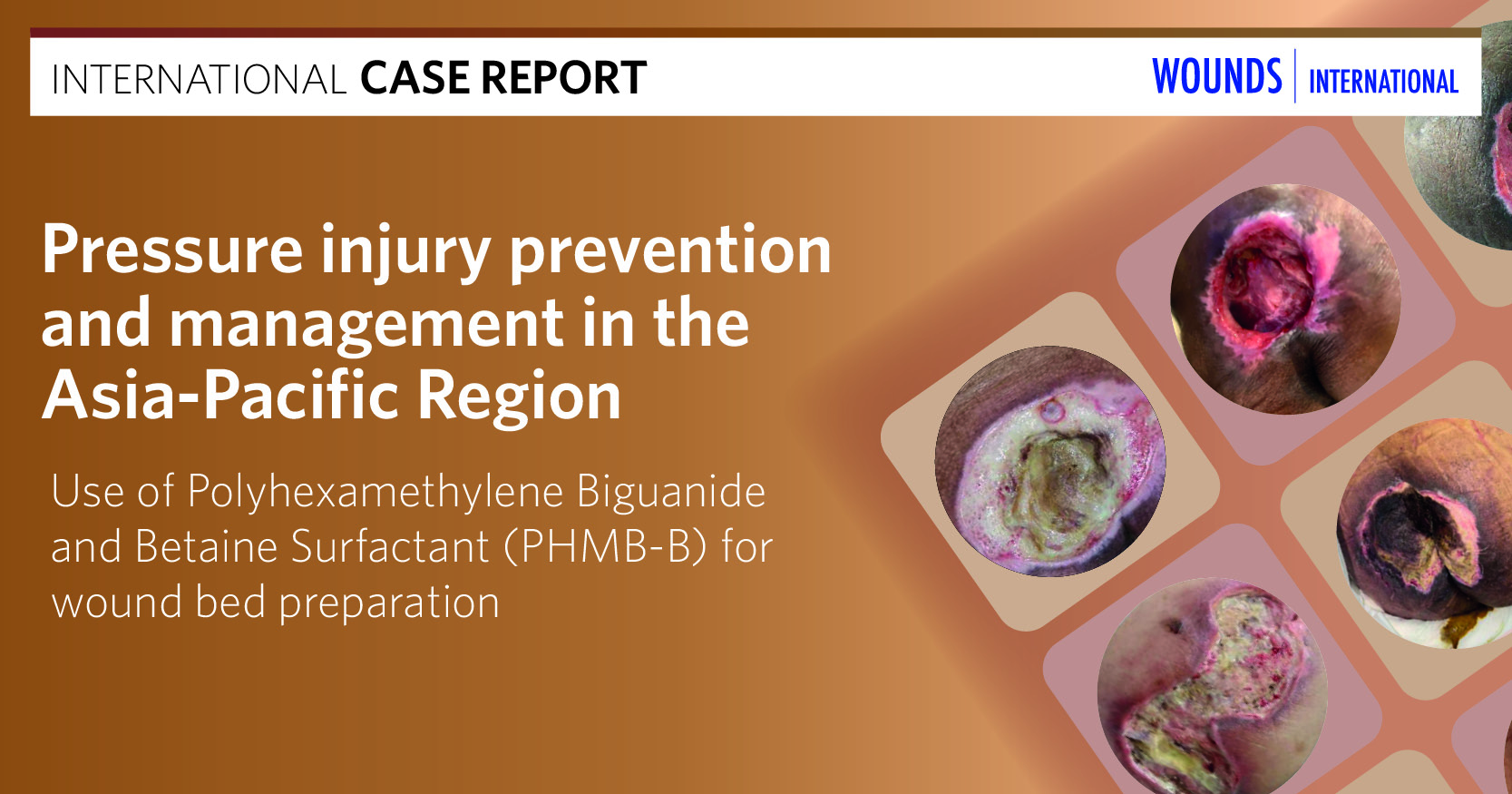
This supplement presents real-world evidence from clinicians working across diverse settings. It features 12 cases from the 2025 Excellence Case Sharing Award abstract submissions, highlighting best practices in care across adult populations in both inpatient and community settings. Together they show how structured assessment, therapeutic wound cleansing, wound bed preparation with polyhexamethylene biguanide and betaine (PHMB-B), appropriate dressings and multidisciplinary, person-centred care can support even complex, infected pressure injuries towards healing.
We thank the healthcare professionals who generously shared their cases, the patients and caregivers whose care they describe and everyone who contributed to bringing this publication together. We hope it supports clinicians across the Asia-Pacific region in delivering better outcomes for the people they care for.
Prof. Emeritus Dato’ Dr. Harikrishna K.R. Nair, Prof. Keryln Carville, Dr. Yuwadee Kestsumpun & Prof. Dr. Zhang Long
Download the PDF below to access the full case series resource