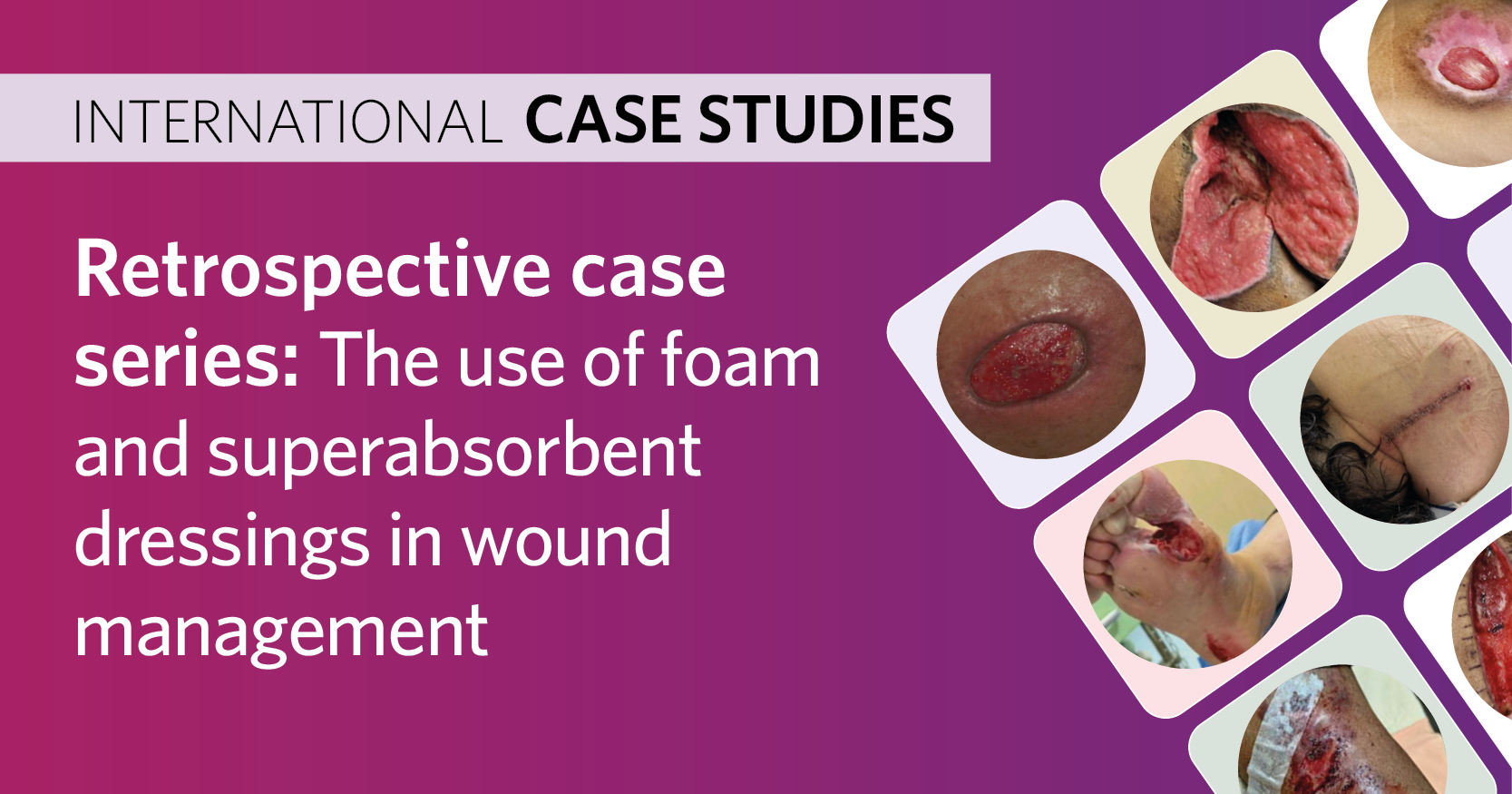
Effective wound management relies heavily on selecting dressings that not only fit the wound’s specific needs but also support the patient’s comfort and healing process. This case series explores the use of advanced foam dressings, with particular focus on the Aquacel® range of foam dressings, to efficiently manage wound exudate while protecting surrounding skin and promoting optimal healing in both acute and hard-to-heal wounds.
Understanding wound exudate
Wound exudate is a fluid produced during the inflammatory and proliferative phases of wound healing. Although primarily water-based, it also contains electrolytes, nutrients, cytokines, proteolytic enzymes, growth factors, waste products and immune cells (Seijo-Rabina et al, 2024).
While a moist wound environment is essential for healing, imbalances can delay the healing progress. Too much exudate can cause maceration and infection, whereas too little can delay healing.
Foam dressings play a key role in controlling exudate by absorbing excess fluid while preserving the moist environment needed for tissue repair (Hargis et al, 2024). Sieracki et al (2020) shows foam dressings also significantly support pressure injury prevention and reduce tissue deformation and stress compared to no dressing.
Aquacel® Foam dressings in exudate management
Aquacel® Foam dressings are multi-layered primary and secondary foams designed for a wide range of acute and hard-to-heal exuding wounds. They combine absorbent foam layers with Hydrofiber® technology, which absorbs exudate, swells to conform to the wound bed and reduces space for bacterial growth. When used as part of a structured care protocol, they provide (Aquacel® Foam, IFU; Waring and Parsons, 2001):
- Moisture management: Absorb excess exudate while preserving the moist environment needed for tissue repair. The dressing locks in fluid, reducing maceration risk. Vertical wicking prevents lateral spread of exudate, while micro-contouring minimises dead space that could encourage bacterial growth
- Skin protection: The waterproof, breathable film protects against external contaminants and reduces friction and shear forces. This barrier also allows moisture evaporation and enables showering or bathing
- Comfort and gentle adhesion: Silicone adhesives adhere lightly to the skin (not the wound), minimising trauma during dressing changes and reducing irritation.
Other Aquacel® variations include:
- Aquacel® Foam Pro: Combines silicone foam with Hydrofiber® for up to seven days wear time and secure, gentle application and removal with minimal trauma to surrounding skin
- Aquacel® Extra™: A soft, sterile, non-woven pad reinforced with regenerated cellulose fibre that transforms exudate into a soft gel, maintaining a moist environment that supports healing and aids autolytic debridement without damaging newly formed tissue. Suitable for leg ulcers, pressure ulcers (stages II-IV), diabetic ulcers, surgical wounds, burns* and oncology-related wounds.
ConvaMax™ Superabsorber in exudate management
ConvaMax™ Superabsorber adhesive and non-adhesive dressings are sterile, multilayer dressings for highly exuding wounds. Both use a Superabsorber core that absorbs and retains exudate and matrix metalloproteinases (MMPs), supporting moist wound healing and reducing maceration. The adhesive version includes a gentle silicone contact layer for secure placement, while the non-adhesive version offers flexible use under secondary fixation for diverse wound types. (ConvaMax™ Superabsorber adhesive, IFU; ConvaMax™ Superabsorber non-adhesive, IFU).
*Refer to indications and instructions on product label approved in your local market. Requirements may vary by region.
Download the PDF is access the full retrospective case series