1. Choosing the ‘just right’ support surface depends on a comprehensive assessment of your patient’s specific risk factors, mobility, and existing injuries, rather than risk scores alone
Support surfaces redistribute pressure. They should be matched to the individual’s needs for pressure redistribution, shear reduction, and microclimate control. The greater the patient’s immobility, the greater the need for immersion into the surface to redistribute the pressure. If the patient’s head is elevated, more shear is placed on the sacrum and heels. Some support surfaces will be able to manage shear well; some will not. If the patient’s skin is damp, usually due to sweat, a microclimate management feature will help keep the skin dry and prevent high friction levels.
2. Choose a support surface for an area of the hospital or aged care center based on usual patient types
It would be ideal if a support surface could be chosen for each patient, but this is often not feasible. So, when upgrading or designing a new unit for care, consider the usual mobility status. For example, are these surgical patients who will generally ambulate within 24 hours? Or is it a medical ICU, where patients will be bedbound for several days? Are these patients with breathing problems who need the head of the bed significantly elevated? Regardless of the usual bed and support surface chosen, be sure you can get the right bed as needed from the supply room.
3. Foam mattresses are a reasonable choice for low risk pressure injury risk patients
Viscoelastic foam of 10-17.5 cm (4–7″) in depth conforms to the body shape to redistribute pressure. They are often used in long-term or aged care settings, due to their low cost and easy maintenance. However, the 4″ and thinner foam mattresses or overlays may lack the necessary immersion depth for effective adaptation that might be needed for heavier or completely immobile patients. In those cases, the foam may ‘bottom out’, where the patient is exposed to the stiffness of fully compressed foam against the bed beneath the foam. The resulting tissue-deforming high pressure will be evident on protuding bony prominences. Foam can also retain body heat and moisture, which contributes to skin maceration, friction and increases the risk of pressure injuries. Patients suitable for foam mattresses must be able to make small body movements on their own to mitigate these risks. Completely immobile patients need more than foam (Shi et al, 2021).
4. For the critically ill, support surfaces serve many functions; protection of skin is just one of them
If you are working with critical care clinicians, the purpose of the bed for the critically ill is more than for skin care. It supports pulmonary function, promotes the ability to get out of bed, and aids the staff with turning in bed. If your patients include traumatic injury, there are contraindications to air-fluidised beds in patients with unstable fractures of the spine or pelvis.
That being said, the critically ill patient has the highest incident rate of pressure injury due to frank immobility or haemodynamic instability, which limits movement and reduces perfusion of the skin. Therefore, support surfaces in critical care should have good immersion to reduce pressure on the skin and good microclimate management to keep the skin dry (Black et al, 2012).
Continuous lateral rotation therapy is often used to improve the relationship of ventilation and perfusion. However, turning is still needed. Support surfaces with continuous lateral turning do not turn patients. When turning, the patient never leaves the bed; therefore pressure and shear are not removed [Figure 1]. Patients using continuous rotation beds need to have the bed paused once a shift, and the patient positioned on their side to relieve the shear forces.
5. Use the microclimate (heat and moisture) management settings on the bed for damp skin
Microclimate management with airflow is a feature of a support surface where air is circulated under a breathable top cover to pull heat and moisture vapour away from the patient. While drying the skin, the air also reduces the temperature of the skin. As temperature of skin rises, the metabolic needs of the skin for oxygen and glucose rise by 10% for each 1 degree increase in body temperature. These substrates cannot be delivered if the skin is under pressure (Baracos et al, 1987). Other strategies for managing microclimate include passive airflow and wicking cover materials. The effectiveness of microclimate management with airflow and these other strategies can only be quantified using standard test procedures. The existence of the feature in a support surface does not assure that it will be sufficient; use the manufacture’s test results to gauge the extent of the microclimate management capabilities.
Patients with spinal cord injury, being fluid resuscitated, who are bariatric and those who are stressed due to pain or dyspnea need a surface with high microclimate management capability to help keep the skin dry and cool.
6. Several choices exist for support surfaces for patients at moderate risk for pressure injuries
Perhaps one of the best options is to use a hybrid support surface that can be modified to fit the patient’s needs. Support surfaces with a combination of air cells covered by foam works well. High-density foam mattresses will work for patients who can move independently. These surfaces are usually dense enough on the outer edge to permit movement out of bed. Overlays are also an excellent choice to add to a standard support surface when conditions present specific needs. Overlays might consist of foam or air cells for enhanced immersion and envelopment, or alternating pressure systems for periodic active pressure redistribution.
7. There are several reasons to replace an existing support surface
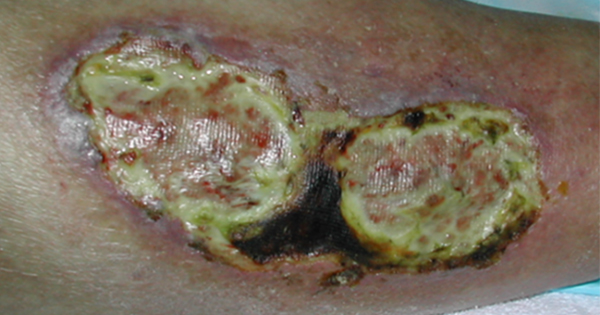
When a patient develops a pressure injury, consider all aspects of care and then upgrade the support surface if the patient cannot be positioned off the wound; has pressure injuries on two or more turning surfaces (e.g. the sacrum and trochanter); has limited turning options; fails to heal or demonstrates wound deterioration despite appropriate comprehensive care; is at high risk for additional pressure injuries; or ‘bottoms out’ on the existing support surface. A decision algorithm was created by McNichol and colleagues (2020) to guide clinical decisions.
8. Support surfaces alone neither prevent nor heal pressure injuries
Support surfaces are a crucial aspect of pressure injury prevention; however, they are only a part of a total programme of prevention and treatment. When pressure injuries deteriorate or fail to heal, the professional should consider replacing the existing support surface with one that will improve pressure redistribution and microclimate management for the individual. Changing the support surface is only one of several strategies to consider. Both the patient’s risk and the pressure injury status over time should be re-evaluated. Preventive interventions and local wound care should also be intensified as needed. A significant increase in risk status may also prompt such re-evaluation of the individual and the support surface.
9. Support surfaces don’t last forever
The life span of support surfaces is difficult to predict. Support surfaces commonly have warranties of 10 years for manufacturing defects, but this should not be interpreted as the expected years of use. Covering materials can be damaged with improper cleaning and disinfecting. Always follow the manufacturers’ recommendations. Nurses and staff who provide direct bedside care must check on the functionality of every support surface and inspect for excessive wear and tear. Foam breaks down over time, loses resilience, and can becomes less effective at pressure redistribution. All powered surfaces only work when power is present. If signs of wear on the surface are noted, if the mattress is thin, deformed, and/or worn in the middle, if the patient says the bed is uncomfortable, the nurse should replace it and send it to maintenance for examination and repair. Todd and colleagues (2025) examined 5121 surfaces across 85 acute health facilities and reported that 59% (n=3,021) required immediate replacement, and slightly less than one-third of support surfaces were deemed in good condition. The most common failure modes were holes, tears, and thinning.
10. An ideal therapeutic support surface
When asked to define an ideal support surface, I included these attributes:
- Motion sensors for fall risk prevention.
- Assistance to move the patient in bed.
- Ability to easily mobilise the patient out of bed.
- Accessibility for X-ray.
- Scale for body weight.
- Customisable features for body size and shape.
- Powered for transport.
- High-immersion mattress that can be ‘stiffened’ for care.
- Mattress with sensors that adjust pressure when the patient cannot be moved.
- Shear protection when head of bed is above 45°.
- Comfortable for the patient.
- Powered ports for patient’s cell phone.
- Quiet and odourless.
Conclusion
While we cannot be Goldilocks and lie in each patient’s bed, we do need to be aware that some beds are too hard, some too soft and try to get the one that is ‘just right’.