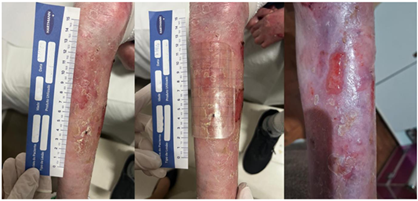
Several critical aspects, such as anatomical location of the wounds and complications caused by concurrent comorbidities that the patients may have, affects the complexity of management of wounds (Sen, 2019). These multifaceted matters may limit the success in wound management if not managed effectively, which, consequently, also negatively affects the quality of life of the patients and cause elevated costs to the health-care systems (Mahmoudi and Gould, 2020).
Unfortunately, wound management decisions are often based on trial and error ritualistic and intuition-based practices, which leads to variation in treatment decisions (Gillespie et al, 2015; Dowsett et al, 2022; Hulbert-Lemmel et al, 2024). Clinical uncertainties can contribute to the use of ineffective treatments (Palacios-Cena et al, 2016). Alternatively clinical evidence helps the clinician identify wound dressings that can promote faster wound healing and are particularly beneficial for those individuals at risk of delayed wound healing due to comorbidities (National Institute for Health and Care Excellence, 2019; Tickle, 2023).
The wound dressing
Ideal wound management depends on accurate patient assessment, wound aetiological diagnosis, clinicians’ knowledge of wound management and awareness of the properties of wound dressings identified when making clinical decisions (Weller et al, 2020). Some commonalities when choosing among dressings include the depth, size and anatomical location of the wound, amount of exudate, tissue present on the wound bed, chronicity, presence of infection, condition of the periwound skin, and associated pain levels (Bitto et al, 2024). A dressing needs to primarily provide a protective physical barrier to protect the wound from the environment but also be non-adherent to the wound bed and atraumatic on removal, provide a moist wound bed to promote autolytic debridement, absorb excess wound drainage, protects the surrounding skin from potential maceration (Obagi et al, 2019; Bitto et al, 2024). The appropriate choice of dressing is also targeted at improving the patient’s quality of life (Bitto et al, 2024).Fundamentally, the dressing of choice should be able to promote a favourable environment for healing, prevent complications, and is suited to the wound type and the patient’s overall condition, and results in painless dressing changes (Costello and Pranjic, 2024).
Dressings evaluated
In 2023, the Ministry of Health (MoH) in Vietnam approved guidelines for the management of diabetic foot ulcers that supported the use of a polyabsorbent fibre pad dressing with technology lipido-colloid with silver sulphate (UrgoClean Ag®, Laboratoires Urgo; TLC-Ag).
Polyabsorbent fibres (Magnet Fibres™, Laboratoires Urgo, France) are designed to continuously debride slough (International Wound Infection Institute, 2022) due to the bonding of the negatively charged fibres and positively charged regions in slough, trapping bacteria and other non-adherent or devitalised material in the dressing, which is then removed when it is changed (Mayer et al, 2024; Nair et al, 2024). The TLC-Ag polyabsorbent fibre pad dressing is a multidimensional dressing that has a combined action of continuous cleansing and debridement of the wound in addition to antimicrobial action (Dowsett, 2023).
The dressing was evaluated in a prospective, multicentre, non-comparative clinical trial with patients living with chronic wounds (Dalac et al, 2016). With the use of the polyabsorbent fibre dressings, by the end of the evaluation period (mean treatment period was of 28.8±4.0 days per patient), results showed that 52.1% of wounds were debrided, with a relative slough reduction of 62.5% (median), while the clinical score (maximum value of 5, based on inflammatory clinical signs) decreased from 4.0 to 2.0.
In a large, prospective, multicentre, observational study, 2,270 participants with wounds of different aetiologies were treated for 4 weeks with the TLC-Ag polyabsorbent fibre pad dressing (Dissemond et al, 2020). All clinical signs of local infection and diagnosed wound infections were noticeably reduced by week 2 and continued to reduce until the final visit. The investigators also concluded that the TLC-Ag polyabsorbent fibre pad dressing had better results regarding its antimicrobial efficacy (82.6%), debridement of slough properties (85.2%), with a good performance and outcome regardless of the amount of sloughy tissue and exudate levels at baseline. The dressing was well tolerated and well accepted by both patients and health professionals.
Although the Vietnam MoH has recommended the TLC-Ag polyabsorbent fibre pad dressing in diabetic foot ulcer management, the evidence, supports its use in other aetiologies, where for example, in the aforementioned observational study (Dissemond et al, 2020), patients with both chronic and acute wounds were included.
The authors evaluated this dressing in a patient with Fournier’s gangrene (FG) after surgical debridement. FG is a rare and often fatal perineal necrotising bacterial infection with an incidence rate of approximately 1.6 per 100,000 males in the US (Firdausiya et al, 2020). FG results from a polymicrobial aerobic and anaerobic synergistic infection of the fascia and subcutaneous soft tissue (Leslie, 2025). These bacteria can be introduced through several sources, including urinary, bowel, or dermal. Urinary tract infections and other infectious processes of the perineum, such as perianal abscesses or even a simple pimple, may also provide a starting point for the infection (Leslie, 2025). Even with aggressive treatment, the mortality rate for FG is approximately 40%, with estimates ranging from 20% to 80% (Lewis et al, 2021). Successfully managing FG is extremely difficult, mostly due to late diagnosis and late referral to specialists, caused by nonspecific symptoms and the rapid progression of necrosis (Rahmatika et al, 2025). Haemodynamic stabilisation, parenteral broad-spectrum antibiotics, and urgent surgical debridement, in which all necrotic tissue is removed until viable tissue is identified, are the main principles of therapy in FG treatment (Syllaios et al, 2020; Lewis et al, 2021). Lewis et al (2021) state that it is crucial to remove necrotic tissue as soon as possible to prevent infection.
Case study
A 45-year-old man, with no known medical history, began experiencing dull pain, swelling, and warmth in the scrotal area, rapidly spreading to the perineum and medial thighs, followed by persistent high fever, fatigue, dysuria, and foul-smelling discharge. Patient self-referred to the hospital 7 days after the symptoms started. On admission (03/04/2025), the patient exhibited FG, with nearly total necrosis of the scrotal region and the posterior penile shaft [Figure 1A]. Erythema, oedema and inflammation extending to groin, thighs and lower abdomen was present. Surgical debridement, suprapubic cystostomy, and colostomy were performed. Intravenous antibiotics were started and continued throughout the treatment. Post debridement [Figure 1B], the wound was cleansed with an antimicrobial and a betaine surfactant, and the TLC-Ag polyabsorbent fibre pad dressing was applied as the primary dressing, held in situ with gauze. The dressings were changed daily. By 14/04 (10 days post-op), the wound bed was healthy with reduced signs and symptoms of inflammation [Figure 1C]. At this point cleansing was done with normal saline and the dressing was changed every 2 days. Progress, with a healthy granulating wound bed, was noted on 19/04 (15 days post-op). IV antibiotics stopped at this time. The same local protocol was continued until 26/04, where partial surgical closure was performed [Figure 1E], with complete surgical closure performed on 15/05 [Figure 1D].
FG is a rare, but very serious and complex, condition, with multiple long-term complications and high mortality rates (Kostovski et al, 2021). In this case, although surgical debridement was essential as a first intervention, the TLC-Ag polyabsorbent fibre pad dressing allowed continuous debridement of the wound and management of the local infection, which was instrumental in achieving a wound that was healthy enough for surgical closure.
Conclusion
Both local and systemic factors can affect wound healing. Local factors include wound depth, infection, peripheral vascular disease, radiotherapy, sustained pressure, and excessive moisture, while systemic factors include coexisting comorbidities (Labib and Winters, 2023).
FG requires rapid diagnosis, antibiotic therapy, and debridement. Once the patient is stabilised, reconstructive options to restore the remaining defects are then prioritized. It is estimated that up to 67% of patients will need some degree of reconstruction afterward (Huayllani et al, 2022). Unfortunately, only a few studies have been published regarding the use of specific dressings used in wound healing post debridement of FG (Huayllani et al, 2022).
Clinicians are faced with a wide range of wound care products to choose from, and decisions may not always be based on best practice and research evidence, which may result in fragmentation of practice and services (Gray et al, 2018). Alternatively, when evidence is available, knowledge transfer and utilisation help to translate study results into everyday clinical practice and health decision-making (WUWHS, 2020).